



Blog
Rashida rebuilding her life in Bangladesh
Rashida: Rebuilding Life in Bangladesh After Trafficking
In Bangladesh, thousands of women like Rashida fall prey to human trafficking every year, deceived by false promises of work abroad. At Mumbai Smiles, we work in the Satkhira district to prevent these cases. Our work focuses on organizing community activities, through the SAPATH project, to raise awareness about the dangers of trafficking. Therefore, we seek to prevent new cases and provide tools to identify them. To this end, we also launch awareness campaigns.
But there is a second key objective in this awareness-raising work: working with the entire population so that the stigma does not fall on those who have already suffered the chains of trafficking firsthand. Because when prevention doesn’t arrive in time, it is necessary to rebuild the lives broken by trafficking.
The deception that changes life
Rashida, 31, was living in a remote village in Satkhira when a relative offered her a cleaning job at a hospital in Saudi Arabia. Desperate to escape poverty, she scraped together the money they asked for by selling her livestock and taking out loans. What she found upon arrival was very different: extreme labor exploitation, confiscation of documents, grueling work hours, cleaning four houses a day, and paying minimal wages, when she was paid at all.
For more than three years, Rashida lived locked up, abused, and with little contact with her family. Only after becoming seriously ill and after her family sent more money, was she able to return to Bangladesh in June 2023, completely broken, physically and emotionally.
A double punishment on return
But the suffering didn’t end at the airport. Like many trafficking survivors, Rashida faced social rejection from her community. Neighbors pointed fingers at her, creditors harassed her daily, and the stigma forced her to flee her own home. Her parents, devastated by debt and shame, died shortly after she returned.
“Women who have been trafficked face double victimization,” explains our team in Bangladesh. “First exploitation abroad, then rejection at home. Without support, many fail to move forward.”
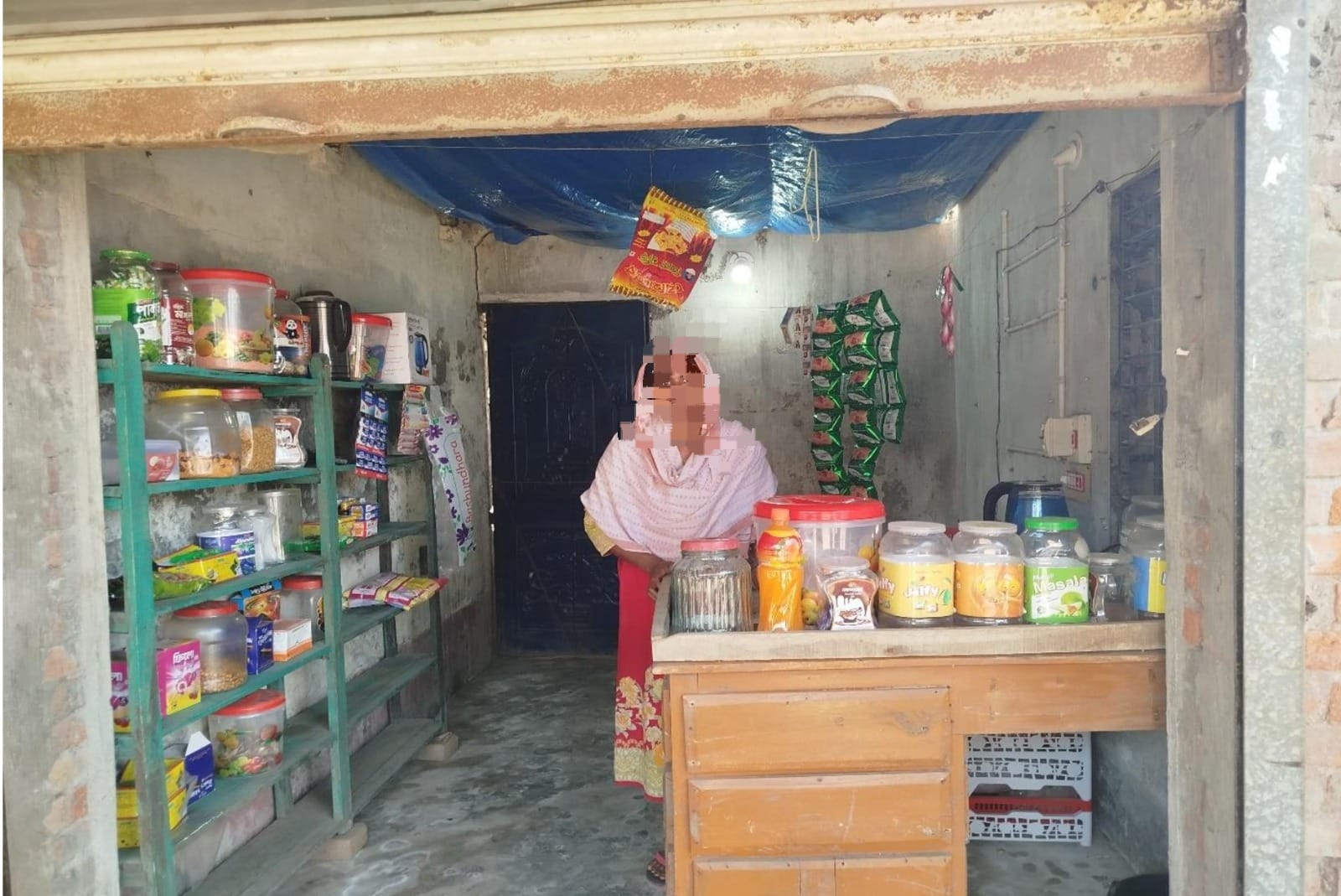
Rashida in her shop
The reconstruction: therapy and opportunity
It was then that our team met her during a community meeting. And the support mechanisms were put in place: Rashida received five sessions of psychosocial therapy that were crucial to her mental recovery. But psychological support was only the first step. Rashida participated in four job guidance sessions and completed a ten-day entrepreneurship training. With the support of seed capital, she opened a small grocery store that now generates enough to support her family and her living. She has purchased a cow, three goats, and poultry that provide additional income and she cooks food that she sells from home.
A change that changes the communities
Today, Rashida has not only regained her economic stability, but also her social dignity. The same community that rejected her now sees her as a role model. She plans to expand her business and create jobs for other women.
Her story illustrates why our prevention work is essential. For trafficking survivors who return traumatized and in debt, having comprehensive resources for psychological support and real economic opportunities is not an option: it is a vital emergency that can make the difference between permanent exclusion and rebuilding a dignified life. It is also important to have a sensitive society that does not allow itself to be influenced by prejudice, but applauds overcoming challenges and supports them in making them possible.