



Blog
Priya’s story: a survivor of trafficking in India
Priya, a fictitious name, is a 26-year-old woman who was nearly trafficked for sexual exploitation by her own sister. Her case illustrates how poverty and vulnerability fuel human trafficking networks. She was only 16 when she fell victim to forced child marriage in Karnataka, India. What was supposed to be the beginning of a new life turned into a nightmare: her brother-in-law sexually abused her. When she cried for help, no one listened. Even worse: they blamed her.
Desperation drove her to attempt suicide. Only then was a police report filed. After a lengthy court process, Priya obtained a divorce, but the damage had already been done.
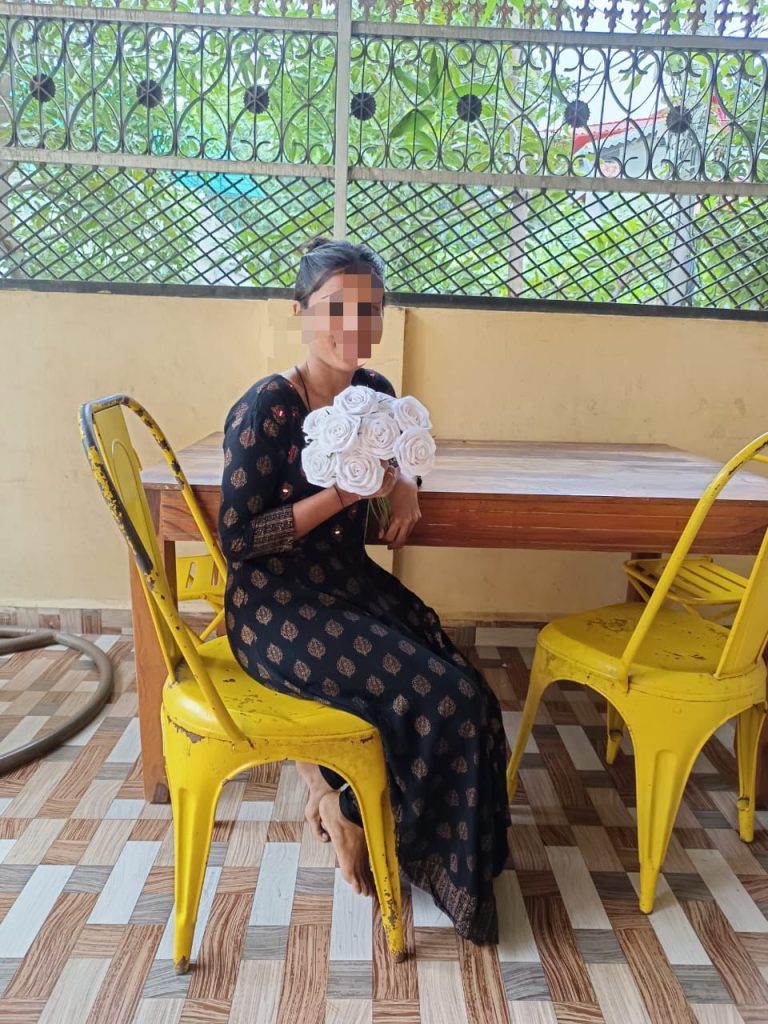
Priya in the Udaan house with the handmade roses to raise a fund to fight against human trafficking.
Human trafficking: the circle of exploitation
Priya’s story is a clear example of how human trafficking thrives on vulnerability. Orphaned at a young age, she was left in the care of her older sister, Juli, who was sexually exploited in MumbaiBombay to support her younger siblings.
Years after the divorce, Juli found herself in desperate financial straits. In debt and without the resources to raise her younger brother, she made a terrible decision: to take Priya to Mumbai to be sexually exploited, like her.
“Juli rented a room in Virar and took Priya there,” the case report explains. “Her plan was to introduce her to the prostitution business, just as she had done years before.”
Human trafficking in: the most common way that we think of
Priya’s case illustrates several key elements of human trafficking in India:
Child marriage: Married against her will at 16
Sexual abuse: Victimized by in-laws
Family sexual exploitation: Her own sister attempted to exploit her
Economic vulnerability: Poverty as a primary risk factor
According to the International Labor Organization, 50 million people are victims of human trafficking worldwide. In India, child marriage and sexual exploitation are particularly prevalent forms of this crime.
Shelter home Udaan: refuge against human trafficking
A
Fortunately, Priya’s story didn’t end in tragedy. When Priya arrived in Mumbai, Juli also took her to the local NGO Savera to learn how to sew bags, and the professionals took notice of the situation.
“The manager of Savera contacted us urgently,” recalls the Mumbai Smiles team. “She asked us to take Priya to our Udaan shelter before she was sexually exploited.”
Udaan, the Mumbai Smiles shelter in Mumbai, became the refuge Priya needed. There, away from family pressures and the threat of exploitation, she was able to express her true desires: to learn hairdressing and computer skills.
“Priya wanted to come to Udaan,” the report explains. “She wanted to learn, to train, to have a real opportunity for a future.”
Socio-labor Integration Program: A Future to Build
The Udaan shelter not only offers temporary shelter. Its goal is to restore dignity and opportunities to women like Priya who have been trafficked or are at risk of being trafficked. Through vocational training programs, psychological support, and legal counsel, Udaan works to help these women rebuild their lives independently and safely.
Preventing Trafficking: The Importance of a Protection Network
Priya’s case demonstrates that human trafficking can be prevented when there is an alert and committed network of professionals. Coordination between different NGOs and the availability of resources like Udaan can make the difference between a life of exploitation and a future of hope.