
Blog
Javed and Adbul: The smiles that human trafficking hasn’t been able to stop
A case of labor trafficking of two Pakistani citizens in Spain
To understand Javed and Abdul’s story of labor trafficking, we need to share some facts that help put it into context. These young men, aged 27 and 23, respectively, met in their hometown of Gujrat, Pakistan, as Abdul is a friend of Javed’s brother. When they met, they didn’t know that, some time later, they met again thousands of miles away from home, in a village in the Maresme region of Catalonia.
As we mentioned, perhaps these data will help us understand why:
Pakistan is among the countries with the most emigrants in the world. According to 2020 data, 6,328,400 Pakistanis live abroad, representing 2.9% of its population. One of the striking characteristics of Pakistani emigration is that the number of male emigrants far outnumbers female emigrants, with 65.53% of men emigrating, compared to 34.46% of women. Spain appears 17th on the list of recipients of this population; in 2024, the figure was 108,000 people. Specifically, Catalonia is the area with the largest concentration of Pakistani-origin populations; in 2023, it had 57,034 registered Pakistani-origin residents.
It’s important to note that Pakistan, with a population of 247.5 million, ranked 164th out of 193 countries and territories included in the Human Development Index in 2022, placing it among the lowest in terms of quality of life. Its current GDP per capita is $1,365 while in Spain it stands at $33,509.
The story of Javed y Abdul
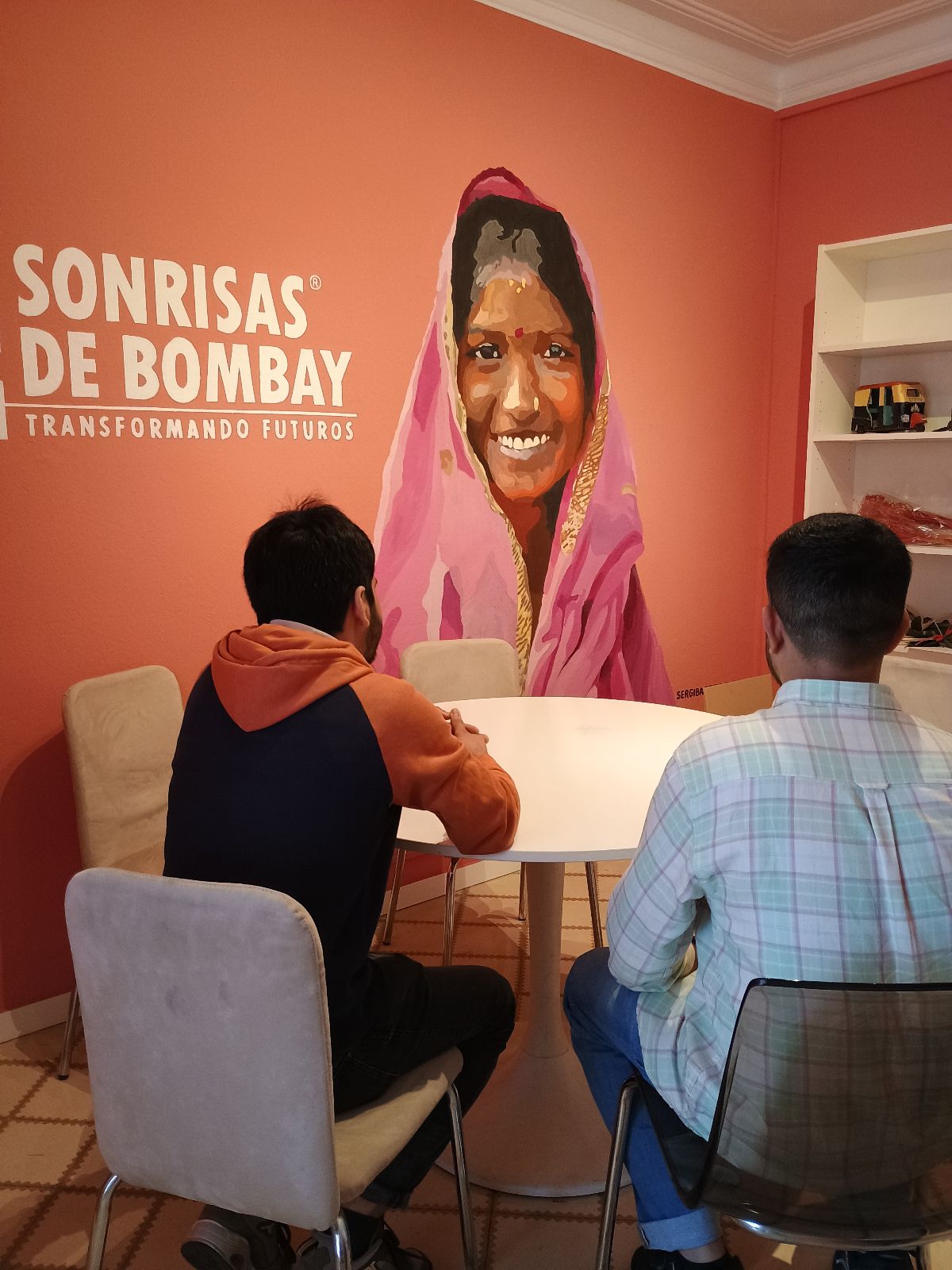
Javed y Abdul in the office of Mumbai Smiles, Barcelona, Spain
This vision of the future is what led our protagonists to embark on a journey in search of a better life. They had similar stories, but they had very important aspects. Javed’s sister was already living in Spain, so Javed, upon arriving, had a place to live. But Abdul didn’t. So the main challenge for both was finding work, and in Abdul’s case, a home as well.
The truth is that it wasn’t too difficult for them to find work in a supermarket, but this is precisely the root of the situation that leads us to talk about them today: they began working in a place without a work permit, and in Abdul’s case, the supermarket also became his home. They lived and worked in exploitative conditions, both in terms of hours and wages. After several months, one of his colleagues, who had gradually become familiar with the environment, managed to report the situation. Thanks to the intervention of the Mossos d’Esquadra (Catalan police), they were freed from these conditions, and after a series of complicated legal procedures, they were able to obtain work and residence permits. In Abdul’s case, he was also able to secure secure accommodation.
The labour trafficking in Spain
The labor trafficking in Spain affects thousands of people each year, many of whom are vulnerable migrants, including women, men, and minors, who are deceived or exploited in various sectors. According to the Ministry of the Interior and international organizations, several labor trafficking networks have been detected and dismantled in recent years, but it is estimated that many victims remain invisible due to the difficulties they face in reporting their situation: fear, irregular status, familiarity with the environment, and language skills. The United Nations Office on Drugs and Crime (UNODC) notes that human trafficking in Spain is a growing problem, with a significant number of cases related to labor exploitation.
The answer of Mumbai Smiles
Following the police intervention, Mumbai Smiles contacted Javed and Abdul. Currently, the trafficking team in Spain, specifically the socio-labor integration department, is working with them to offer them resources that will allow them to improve their language skills and access jobs with decent conditions that suit their interests and abilities.
Beyond the data that helps us understand their situation, we don’t want you to lose sight of the most important thing: we’re talking about two young people full of hope and dreams, eager to prosper. Furthermore, and even more surprisingly, despite everything they’ve experienced (being far from home, working in exploitative conditions, experiencing a fair amount of loneliness, etc.), what they highlight most is how well they feel treated in the city they live in, the jokes and conversations they can now have with the customers at the supermarket where they currently work, and, above all, that they now feel that this is their home, that they understand many things, and that this is where they live and where they want to build their future.
*Their names are fictitious for the safety purposes